New River Head windmill base at the Quentin Blake centre for illustration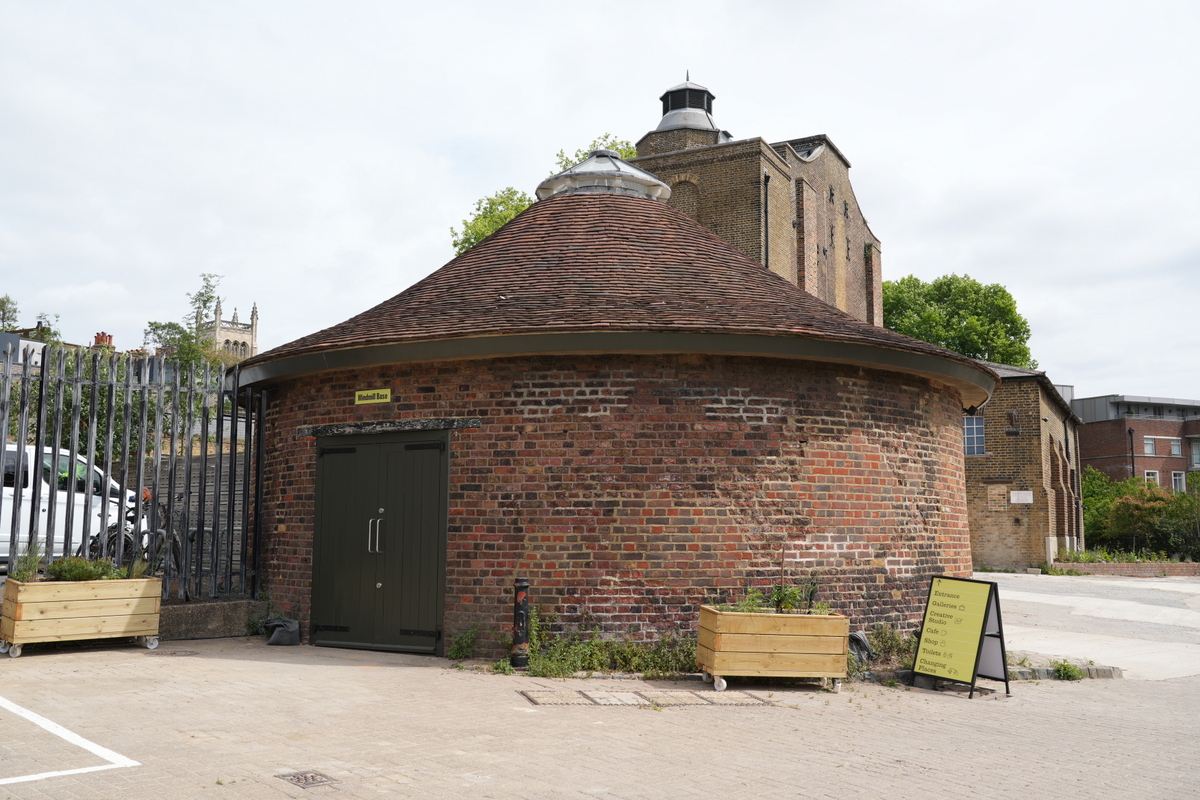
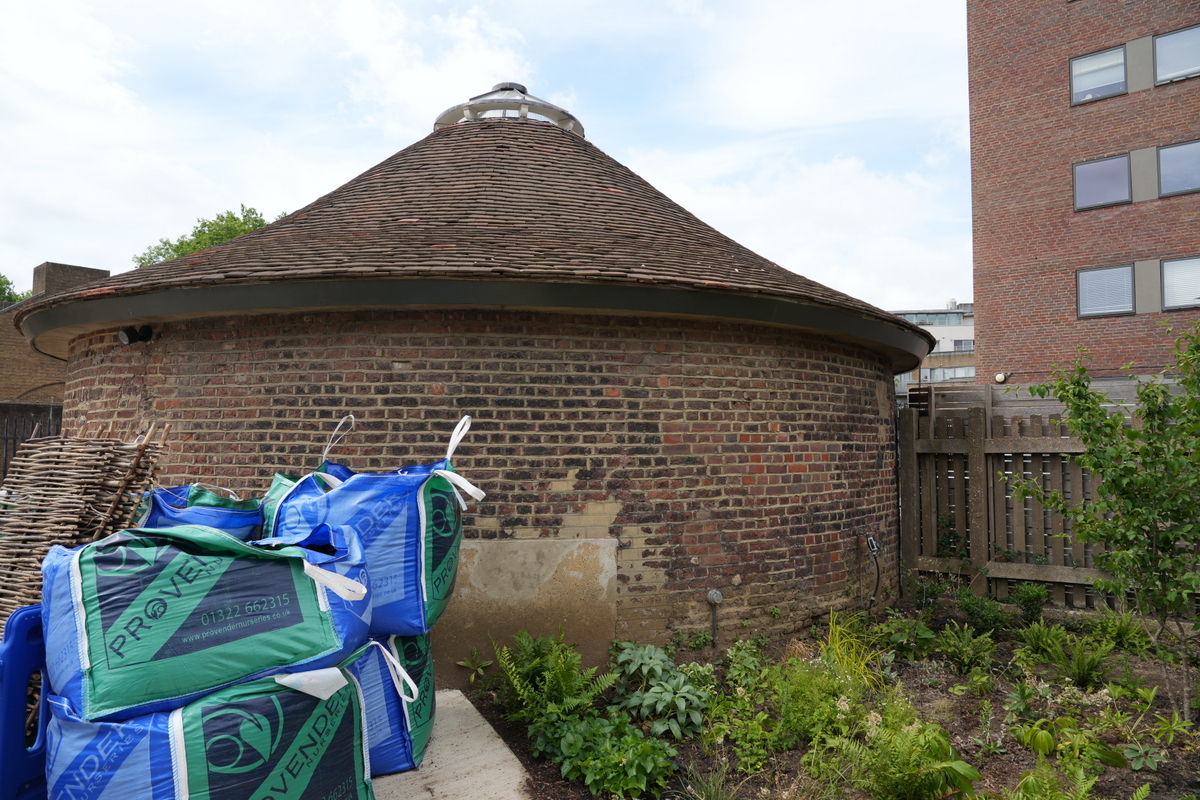
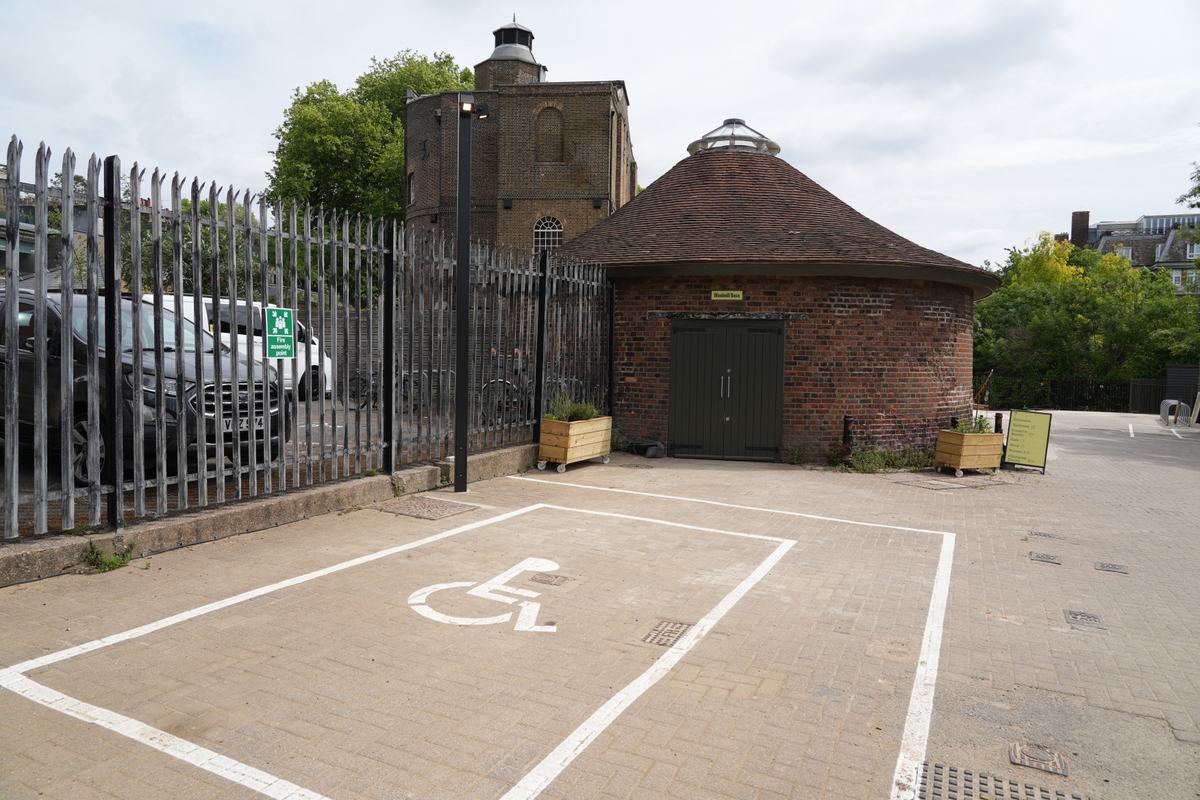
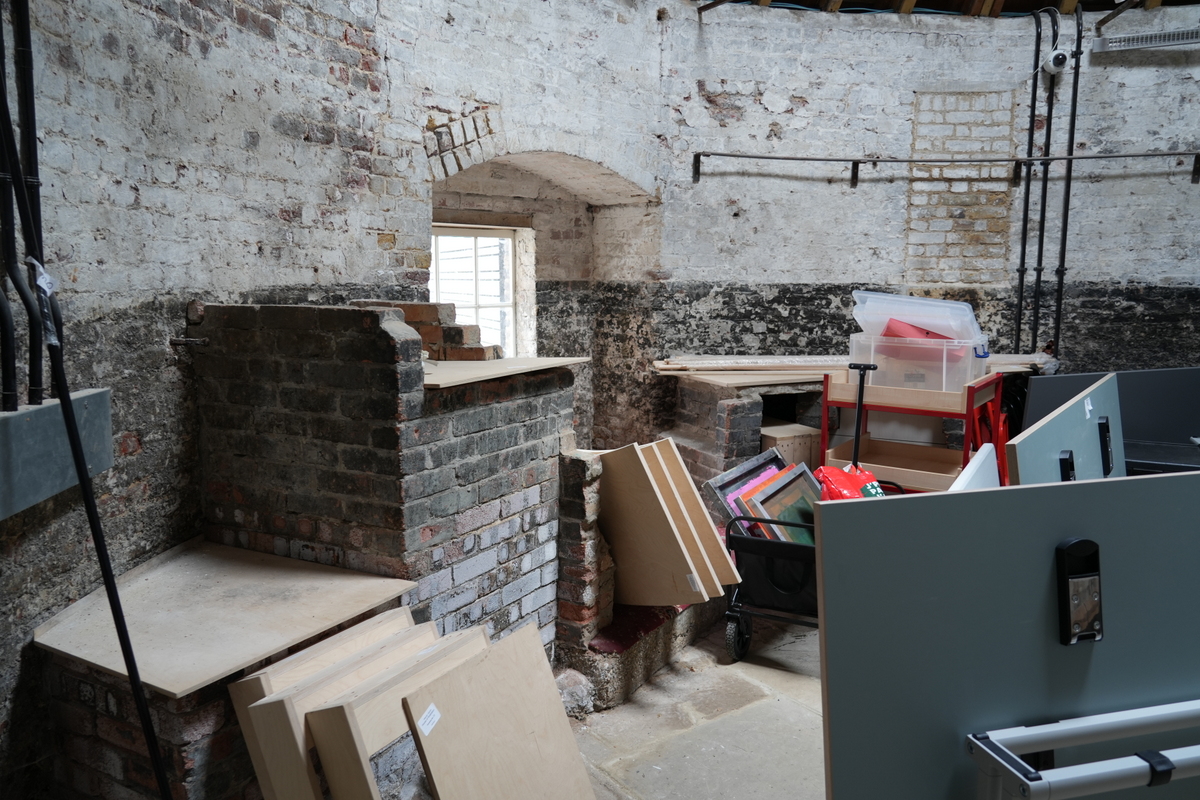
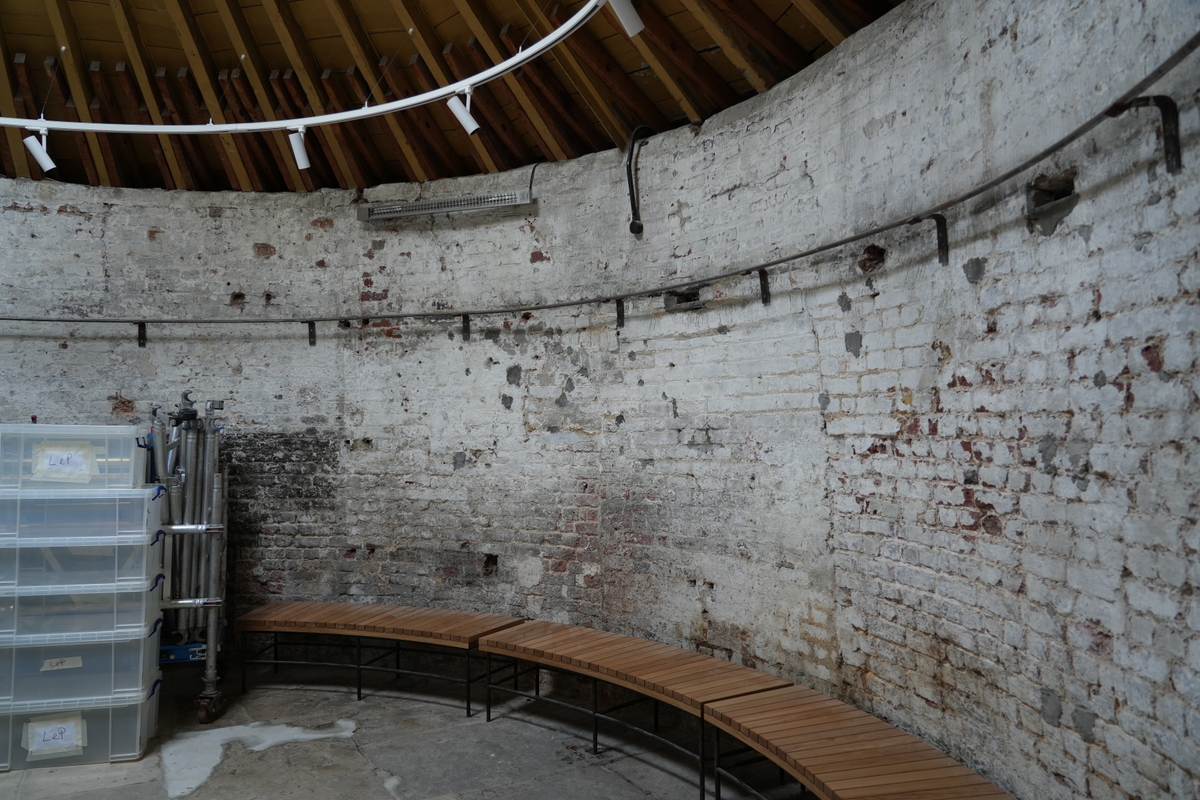
The windmill base has not been substantially changed from its general appearance in recent years, though some work has been done on it. Clearly it has had new electrical fittings, a picture rail installed to attach artwork, and new curved seating and curved worktops have been constructed. The internal walls however retain their original much patched and distressed appearance, and the existing brick built structures inside, whose purpose is uncertain have been retained, even down to the patch of carpet below the window. Early on in the conversion works, the pinnacle of the roof was removed since it was damaged, and this has been reused to form a 6-sailed windmill model or sculpture that will be shown inside. Externally the ugly protective concrete blocks that protected the mill when the yard was home to heavy machinery have now been removed, but the cast iron bollards which do a similar job retained. However, even the simple task of removing the weeds up the walls, and around the base of the area has not been performed. A garden has been planted up to the mill on the north side, and at the preview there was still left over garden landscaping construction materials partly obscuring the mill from the east side. The Thames Water plaque that used to be above the doorway, giving a one sentence history of the mill has been removed. Disabled parking places have been laid out alongside the mill, which when occupied will detract from the sightlines available from the west side.
When not in use for paid workshops, the windmill access will be free of charge. The centre as a whole is open Wednesday to Sunday, 10:00 - 17:00, and the path through the compound passing the windmill is traversable on opening days 09:30 - 17:30.| Last generated 16/10/2026 | Text and images © Mark Berry, 1997-2026 - |