Search: Google images eBay wikipedia YouTube
Postcode: BN18 9LTwind engine by Duke & Ockenden of Littlehampton
[info] [museum homepage]Search: Google images eBay wikipedia YouTube
Search: Google images eBay wikipedia YouTube
Éolienne Bollée No.1 - substantially complete; restoration under consideration
[info]Search: Google images eBay wikipedia YouTube
Wind engine by John Wallis Titt function:Corn mill|Pumping mill/wheel|Saw mill - magnificently restored in 2002
[info] [details] [details] [Grant approval - 1995] [Opening report]Entry in Mills Archive database - #1777 - Wind engine, Crux Easton (has photos)
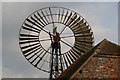
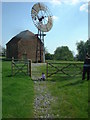
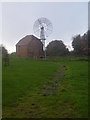
This wind engine is of the 'Simplex' type designed by John Wallis Titt, and was constructed in 1891 for the Earl of Caernarvon to pump water from a nearby well. It also operated a saw and corn mill. It ceased work in the 1920s, but was restored in 2003.
Heritage Lottery Fund - £202600 : 03 Aug 1999 : Crux Easton Wind Engine Restoration
Search: Google images eBay wikipedia YouTube
Postcode: LE7 9DJ19th Century wind engine
[info]Search: Google images eBay wikipedia YouTube
hybrid wind engine, consisting of a Climax mechanism on a Duke & Ockenden tower
[info]Search: Google images eBay wikipedia YouTube
a collection of restored wind engines
[related mention]Search: Google images eBay wikipedia YouTube
Duke & Ockenden
[info]Search: Google images eBay wikipedia YouTube
Halladay's patent design of 1854, as manufactured by Bury and Pollard, Pollard Jephson and Co., Owens and Co. and others. The last examples to survive complete were Angmering (now gone) and Iwade (now restored by Bob Morse). Halstead House Farm, Leicestershire, partially surviving, was another one of the same type.
[photo] [photo]Search: Google images eBay wikipedia YouTube
John Wallis Titt wind engine
[info]Search: Google images eBay wikipedia YouTube
Postcode: SO40 4UXJohn Wallis Titt wind engine - purchased 1873 for £155, now long since disappeared
[info]Search: Google images eBay wikipedia YouTube
John Wallis Titt wind engine
[info]In the UK, these machines are generally called "wind engines", to distinguish them from our windmills which (predominantly) grind grain.
Wind engines have 4 main distinguishing features:
[history] [The company today] [history (earlier location)] [company archives] [Simplex engine]
[company history] [company archives]
| Last updated 13/02/2026 | Text and images © Mark Berry, 1997-2026 - |
 (
(